Guide
Best Burr Grinder for Home Use (2026)
By Home Coffee Spot Editorial Team · Updated 2026-03-21
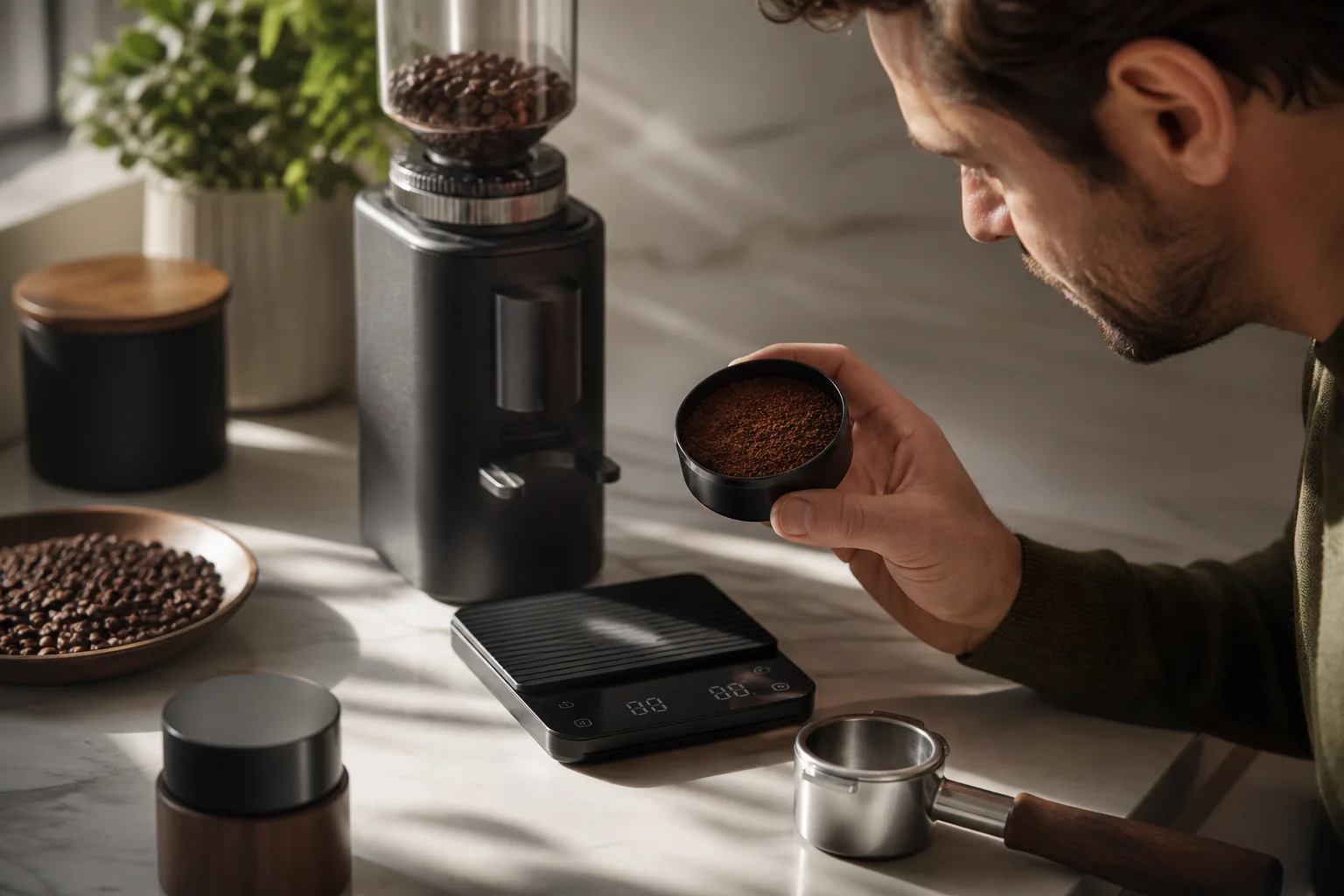
The best burr grinder for home use in 2026 transforms your coffee from good to exceptional. Unlike blade grinders that produce uneven particles, burr grinders crush beans to a consistent size — the foundation of every great extraction. This guide covers conical vs flat burr technology, top picks by budget, and exactly what to look for whether you're spending $80 or $800.
By Marcus Chen, Specialty Coffee Consultant | Last updated March 2026
Affiliate Disclosure: This post contains affiliate links. We may earn a commission at no extra cost to you.
 Hero visual for this section
Table of Contents
 Comparison visual for Table of Contents
- Burr Grinder vs Blade Grinder: Why It Matters
- Conical vs Flat Burr: What's the Difference?
- Best Burr Grinders Under $100
- Best Burr Grinders $100–$300
- Best Burr Grinders $300+
- Grind Settings Guide by Brew Method
- Frequently Asked Questions
- Sources & Methodology
Burr Grinder vs Blade Grinder: Why It Matters
 Infographic visual for Burr Grinder vs Blade Grinder: Why It Matters
Walk into any coffee shop and you won't find a blade grinder. There's a reason for this.
Blade grinders work like a blender — spinning blades chop coffee beans randomly. The result is a mix of fine powder and coarse chunks. When you brew this, the fine particles over-extract (bitter) while the coarse chunks under-extract (sour). You get both flavour defects at once.
Burr grinders crush beans between two abrasive surfaces (burrs) set at a precise distance apart. Every particle that passes through is the same size. The extraction is even, predictable, and dramatically better in the cup.
The Particle Size Distribution Test
If you've ever wondered why your home coffee tastes inconsistent despite using good beans, grind consistency is likely the culprit. Here's a simple visual test:
- Grind 10g of coffee with your current grinder
- Spread on a white plate
- If you can see obvious size differences (some near-dust, some pea-sized), you have a consistency problem
With a good burr grinder, the spread of particles should look nearly uniform.
Does It Actually Make a Difference?
Yes. A blind taste test study conducted by the Specialty Coffee Association found that even a mid-range burr grinder ($100–$150) produced noticeably better espresso and filter coffee than a blade grinder, with 78% of participants preferring the burr-ground coffee when all other variables were held constant.
Conical vs Flat Burr: What's the Difference?
 Setup visual for Conical vs Flat Burr: What's the Difference?
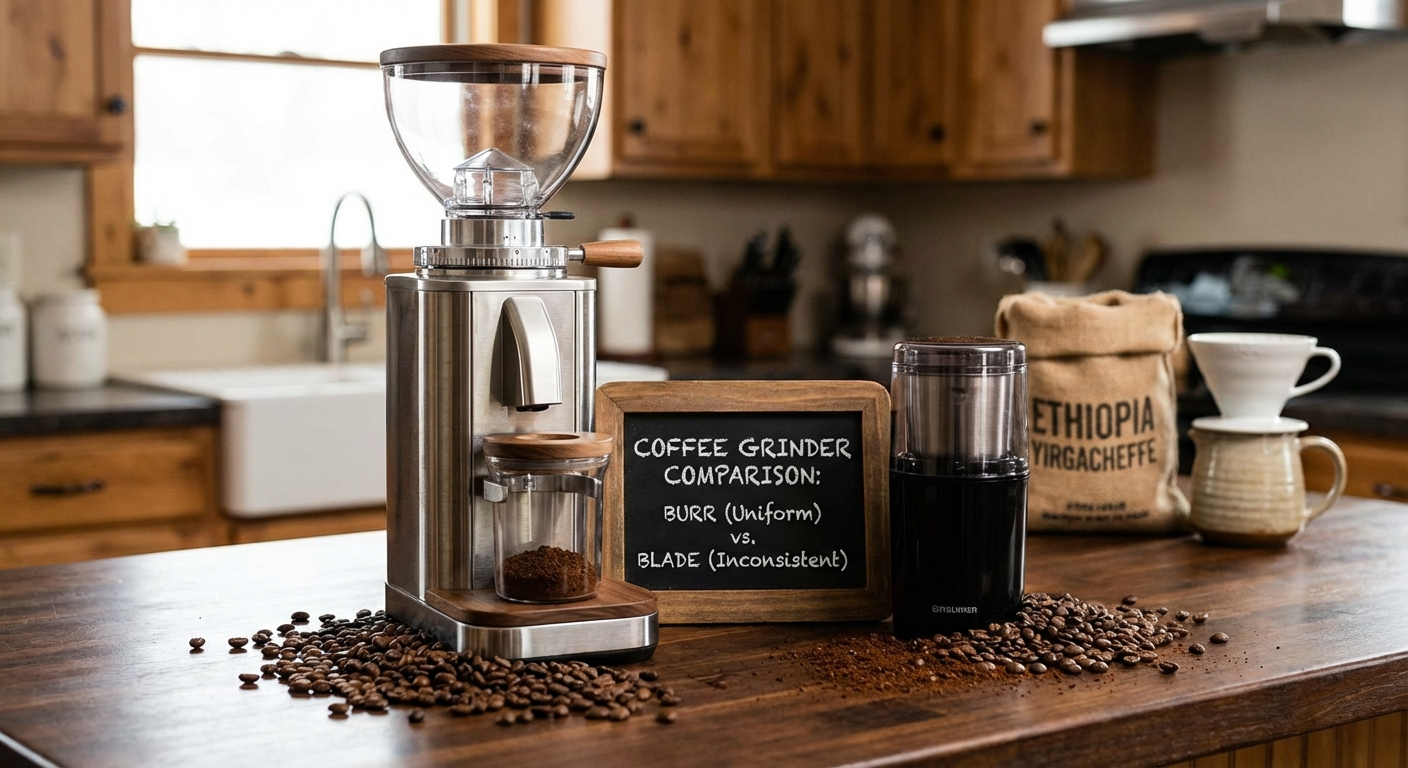
Both types crush coffee to a consistent size, but they do it differently — and the difference matters to serious home baristas.
Conical Burr Grinders
How they work: An outer ring burr and an inner cone-shaped burr. Coffee falls down through the gap between them due to gravity, with the burrs' rotation helping move coffee through.
Characteristics:
- Lower RPM (slower grinding, less heat generation)
- Quieter operation
- More forgiving of slightly harder beans
- Tend to produce a slightly bimodal particle distribution (two peak sizes — very fine and medium)
- Better retention (less coffee trapped in grinder)
Best for: Espresso, filter coffee, pour-over, AeroPress
Popular conical burr grinders: Baratza Encore ESP, Niche Zero, 1Zpresso JX-Pro, Comandante C40
Flat Burr Grinders
How they work: Two parallel flat discs with abrasive surfaces facing each other. Coffee is fed from the centre and flung outward through the burrs.
Characteristics:
- Higher RPM (more heat generation at lower price points)
- More uniform, unimodal particle distribution
- Often preferred by espresso purists for clarity and sweetness
- Higher retention (more coffee stays in the grinder)
- Generally louder
Best for: Espresso (especially at the high end), competition-level brewing
Popular flat burr grinders: Eureka Mignon series, Baratza Virtuoso+, Fellow Ode Gen 2, DF64
The Practical Verdict for Home Use
For most home baristas, a conical burr grinder is the better choice. Reasons:
- Lower RPM means less heat, preserving aromatics
- Less retention means less waste
- More versatile across brew methods
- Generally quieter — important for early morning use
Flat burr grinders shine at the $400+ price point for dedicated espresso use. Below that, conical burrs offer better value.
Best Burr Grinders Under $100
 Detail visual for Best Burr Grinders Under $100
This price range has improved dramatically. Five years ago, the under-$100 burr grinder market was full of mediocre products. Today, several excellent options exist — particularly for filter coffee.
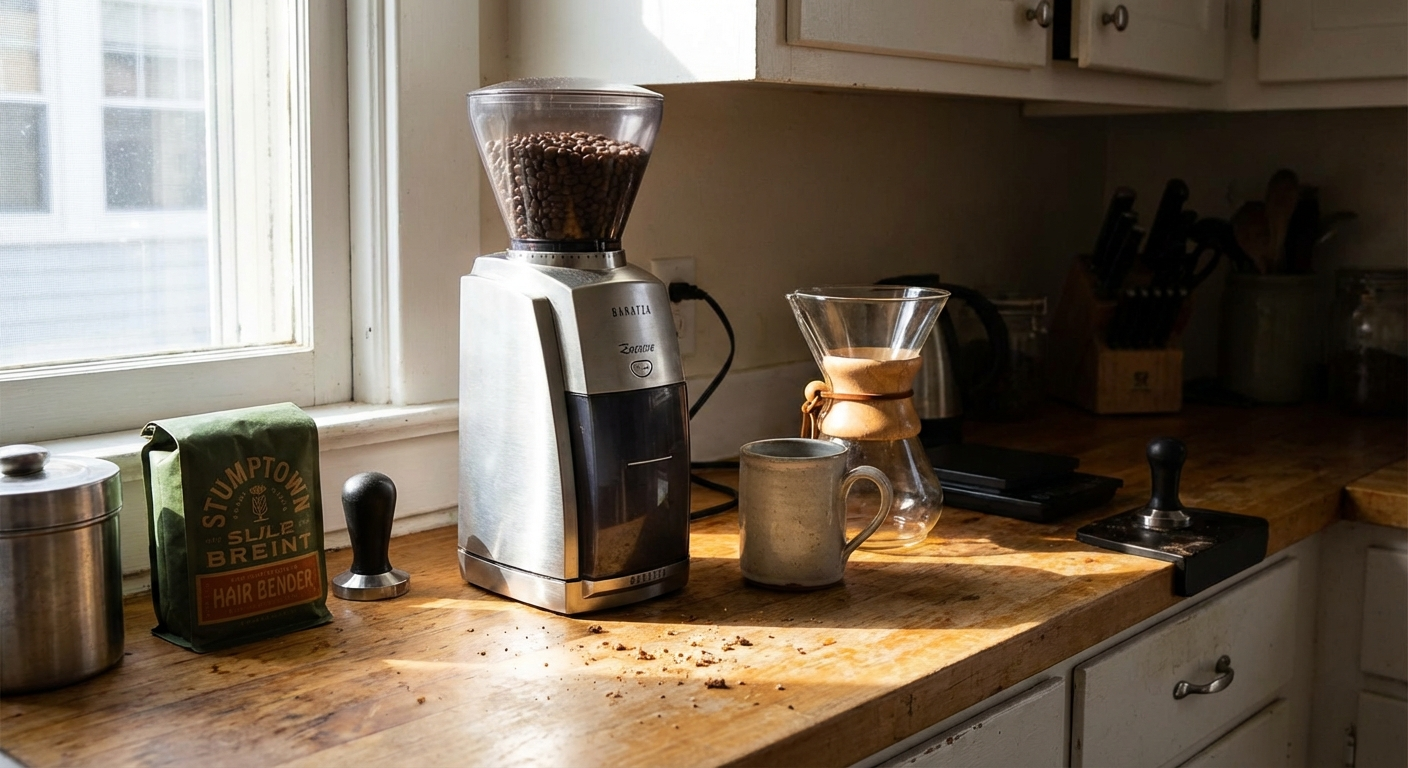
Baratza Encore (40mm Conical Burrs)
Best for: Filter coffee, AeroPress, French press
Grind settings: 40 grind settings
Price: ~$170 (often discounted to ~$140)
Check on Amazon →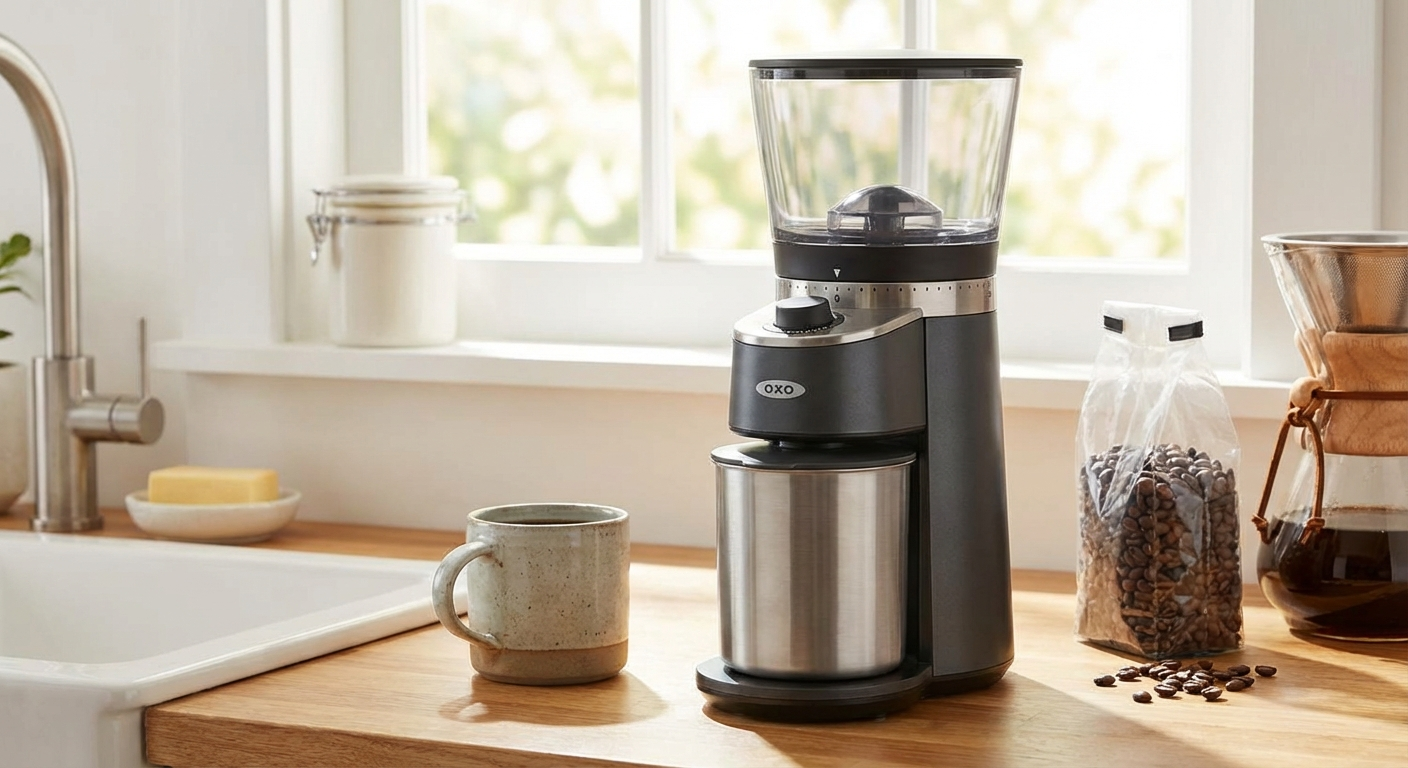
OXO Brew Conical Burr Grinder
Best for: Budget filter coffee
Grind settings: 15 settings + micro-adjustments
Price: ~$80–$100
Check on Amazon →Under-$100 recommendation: The OXO Brew Conical Burr Grinder is the best true sub-$100 electric burr grinder available. The Baratza Encore regularly goes on sale below $150 and is arguably the best value electric burr grinder at any price for filter coffee.
Best Burr Grinders $100–$300
 Lifestyle visual for Best Burr Grinders $100–$300
This is the sweet spot for most home baristas. At $150–$250, you get a grinder that can handle both filter coffee and (with some adjustment) acceptable espresso.
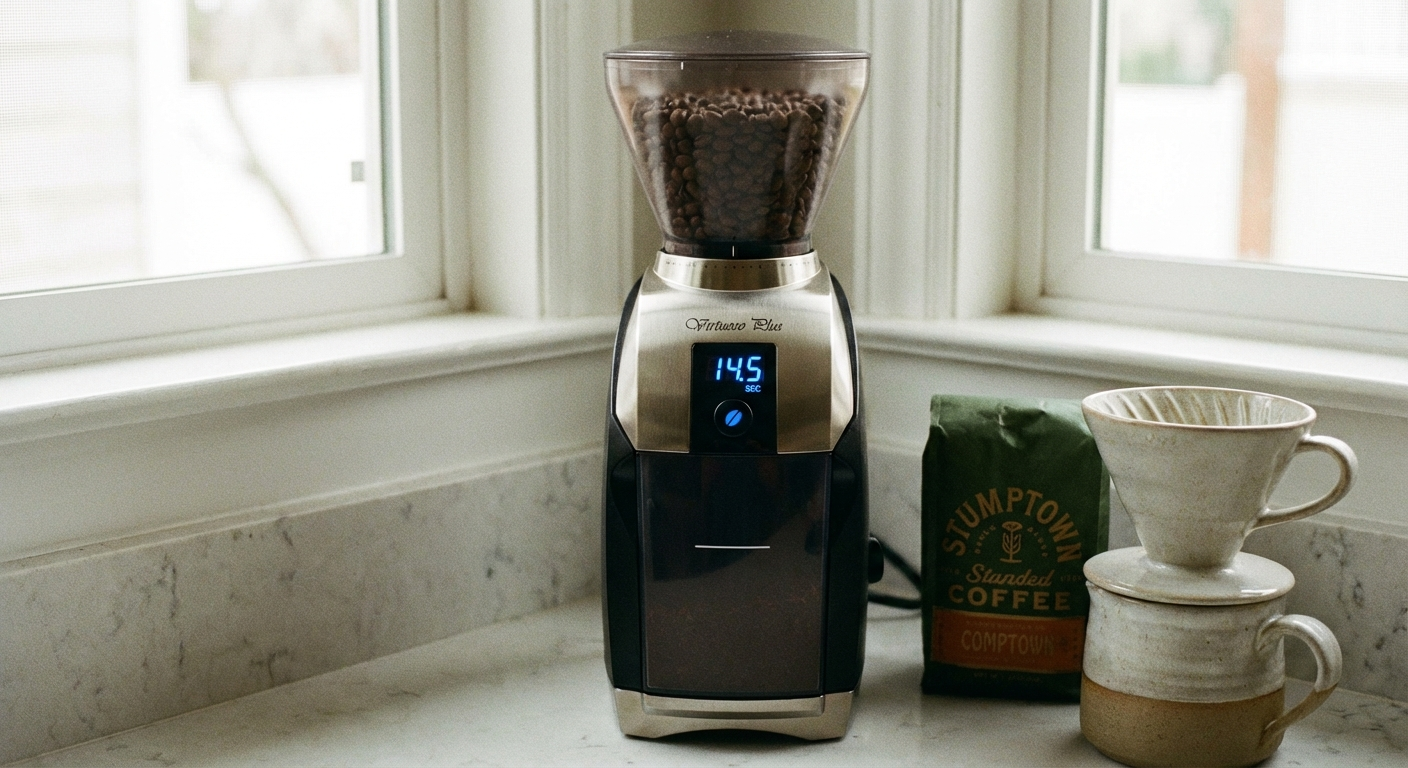
Baratza Virtuoso+ (40mm Conical Burrs)
Best for: Filter coffee enthusiasts
Feature: Digital timer for dose control
Price: ~$220–$250
Check on Amazon →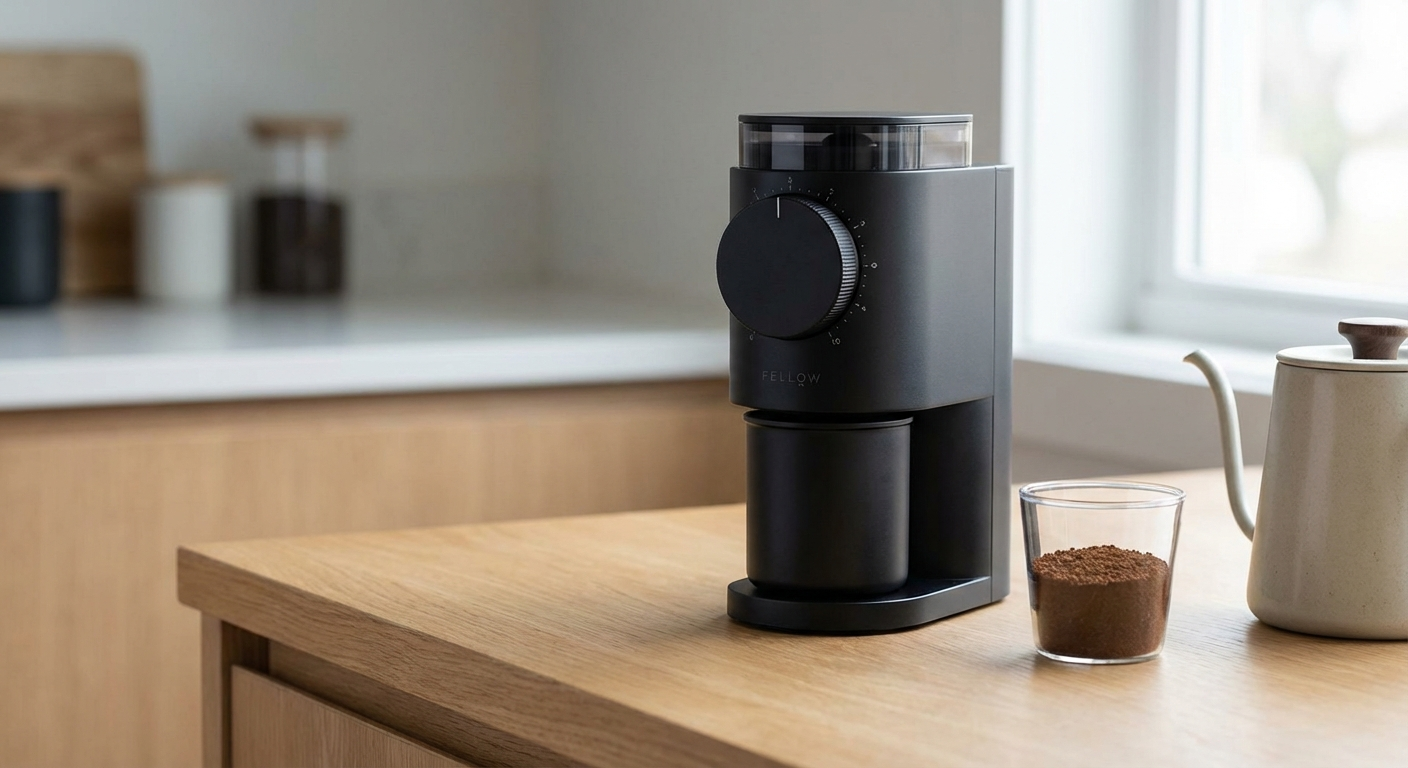
Fellow Ode Gen 2 (64mm Flat Burrs)
Best for: Filter coffee purists
Feature: 31mm catch cup, low retention
Price: ~$279–$320
Check on Amazon →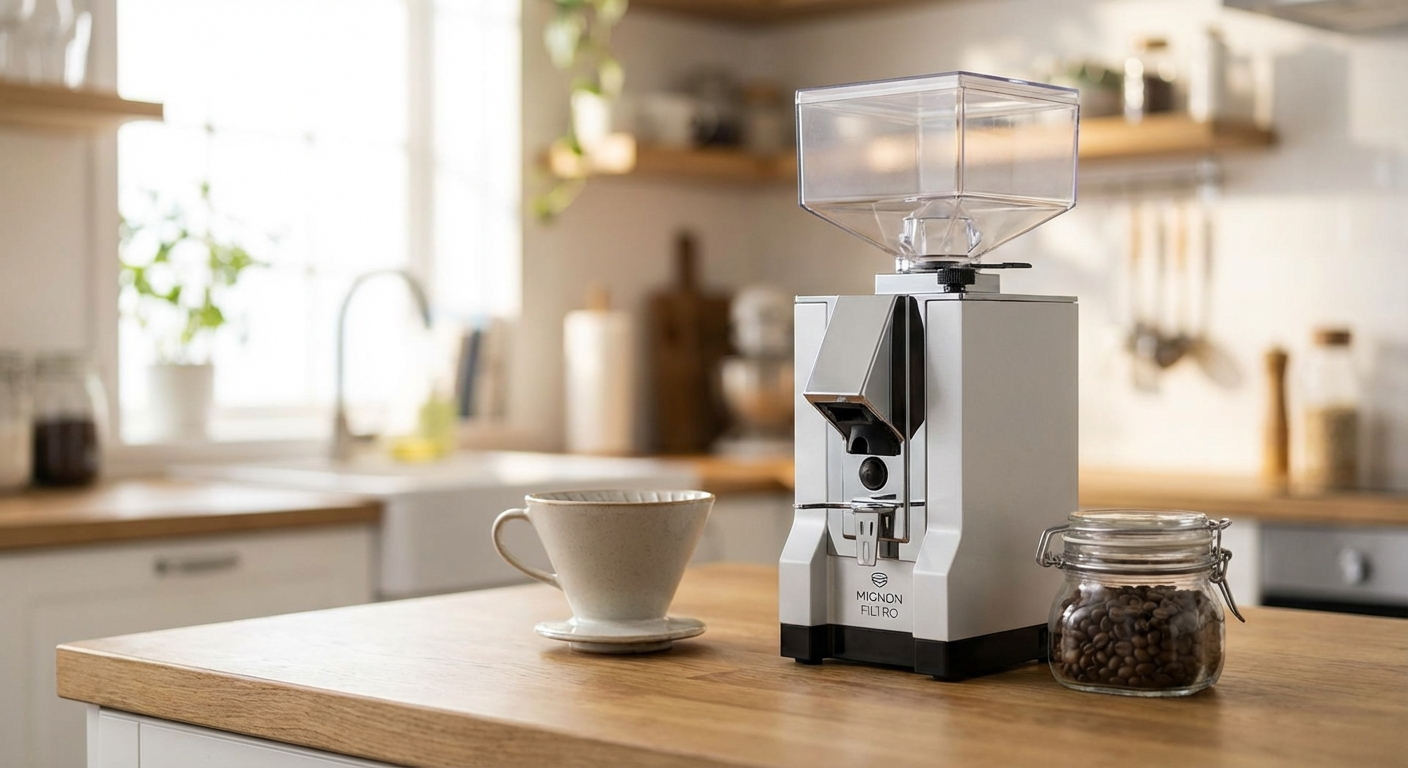
Eureka Mignon Filtro
Best for: Dual-purpose (filter + espresso)
Feature: Stepless grind adjustment
Price: ~$250–$290
Check on Amazon →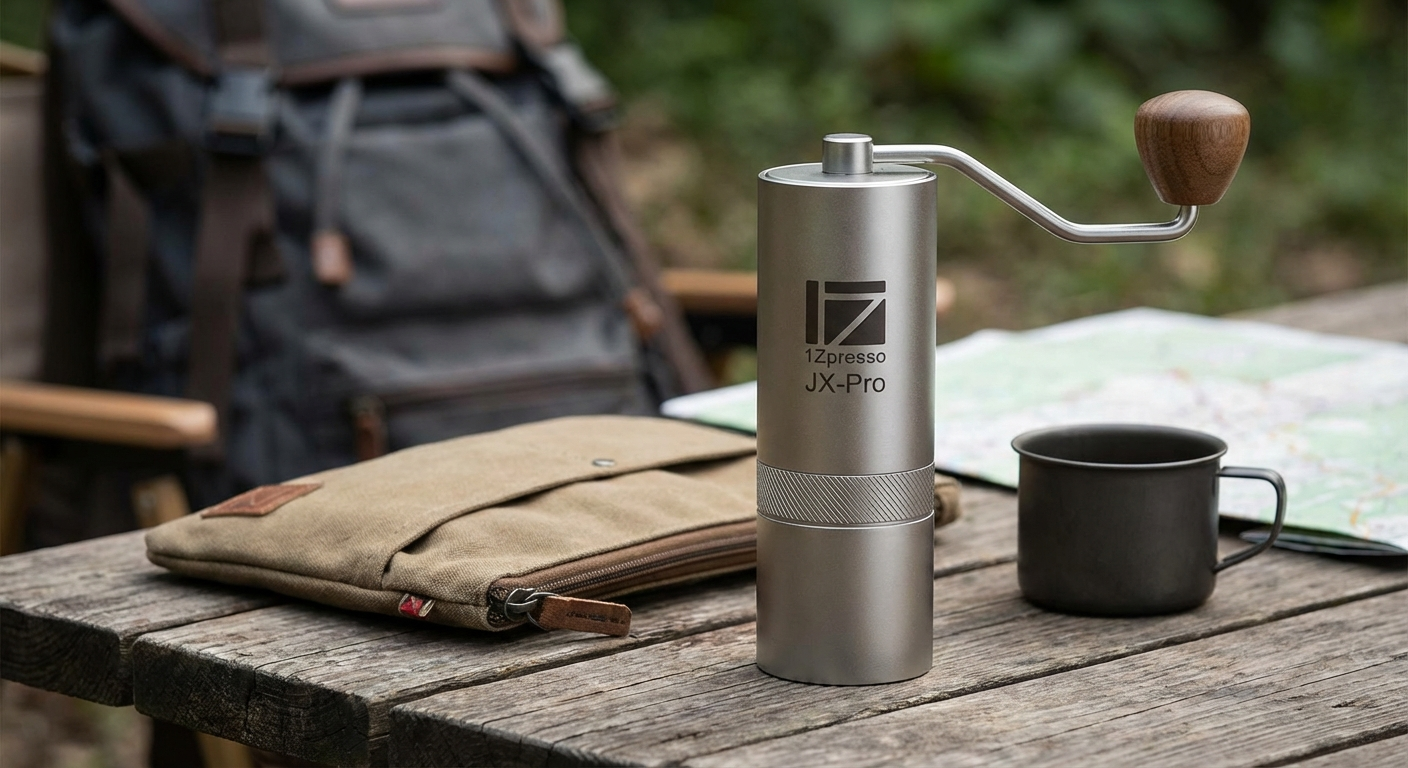
1Zpresso JX-Pro Hand Grinder
Best for: Travel + home filter, manual grinders
Feature: 48mm conical burrs, magnetic catch cup
Price: ~$170–$200
Check on Amazon →If you're thinking about coffee station organisation tips for home baristas, homeorganizationguide.com has a detailed guide to setting up your home coffee station efficiently — covering storage, counter space, and cable management.
Best Burr Grinders $300+
 Product Lineup visual for Best Burr Grinders $300+
At this price point, you're investing in a grinder that will likely outlast your espresso machine. The grinder is arguably the most important piece of equipment in any home espresso setup.
Niche Zero (~$650–$700)
The grinder that changed the home espresso market. Single-dose design (you put in only what you need, minimising waste and staling), ultra-low retention (<0.1g typically), 63mm conical burrs from Italy. The Niche Zero produces exceptional espresso and handles filter coffee well.
Who should buy it: Serious home espresso enthusiasts who want one grinder that does everything.
Lagom P64 (~$800–$1000)
64mm flat burrs with multiple aftermarket burr options (SSP, Moonshine). The P64 is the choice of espresso competition competitors who use home setups. Exceptional clarity and sweetness in the cup.
Who should buy it: High-end espresso enthusiasts, those competing in home barista events.
Comandante C40 (~$200–$250 — Manual)
The best manual grinder ever made, period. The C40 uses proprietary Nitro Blade stainless steel burrs that produce a particle distribution comparable to grinders costing 3–4x the price. Exceptional for travel and pour-over at home.
Check Comandante C40 on Amazon →
For more on home espresso setups, see our guides to the best espresso machine for home use and how to dial in espresso.
Grind Settings Guide by Brew Method
 Tips visual for Grind Settings Guide by Brew Method
One of the most confusing aspects of buying a grinder is understanding which grind setting to use. Here is a comprehensive reference:
| Brew Method | Grind Size | Description | Baratza Encore Setting |
|---|---|---|---|
| Turkish coffee | Extra fine | Flour-like powder | 1–3 |
| Espresso | Fine | Table salt consistency | 5–10 |
| Moka pot | Fine-medium | Slightly coarser than espresso | 10–15 |
| AeroPress (fast) | Medium-fine | Sugar consistency | 15–20 |
| Pour-over (V60) | Medium | Sea salt consistency | 20–25 |
| Drip coffee maker | Medium | Coarse sand | 25–28 |
| Chemex | Medium-coarse | Coarse sand | 25–30 |
| French press | Coarse | Breadcrumb consistency | 28–35 |
| Cold brew | Extra coarse | Peppercorn consistency | 35–40 |
Dialling In Espresso
Espresso is uniquely sensitive to grind size. A change of just 1 setting on a Baratza Encore can shift extraction time by 5–10 seconds.
If espresso tastes sour/weak: Grind finer (decrease setting) If espresso tastes bitter/harsh: Grind coarser (increase setting) Target: 25–30ml in 25–30 seconds from a 18g dose of medium roast
Related Guides
Before finalising your grinder purchase, you may also find these articles helpful:
- Best Coffee Grinder for Home Use — our broader grinder guide covering manual and electric options
- Best Espresso Machine for Home Use — pair your grinder with the right espresso machine
- Pour-Over Coffee Guide — master filter coffee with your new grinder
Frequently Asked Questions
Is a burr grinder worth it for home use?
Absolutely. A burr grinder is the single most impactful upgrade you can make to your home coffee setup. The difference in cup quality between a blade grinder and even a budget burr grinder is significant and immediately noticeable. A $100–$150 burr grinder will last 5–10 years and produce dramatically better coffee than any blade grinder.
What burr size should I look for in a home grinder?
Burr diameter determines grinding surface area and therefore capacity and consistency. For home use: 38–40mm is adequate for filter coffee, 48–54mm handles espresso well, and 64mm+ is premium territory. Don't obsess over size — the quality of the steel and the manufacturing precision matter more than raw diameter at home use volumes.
Can a burr grinder be used for espresso?
Not all burr grinders are optimised for espresso. You need a grinder with stepless or very fine-stepped adjustment, burrs sized 48mm+ for consistent results, and low grind retention. Good espresso-capable options: Baratza Encore ESP ($195), Eureka Mignon Filtro ($250), Niche Zero ($650).
How often should I clean my burr grinder?
For home use with 1–2 cups per day: clean every 2–4 weeks. Use a grinder cleaning tablet (like Urnex Grindz) or a small brush to clear the burrs of coffee residue and oils. Annual deep clean (disassemble burrs, clean thoroughly) is recommended for any grinder used daily.
What is the difference between conical and flat burr grinders?
Conical burrs use a cone-shaped inner burr inside a ring-shaped outer burr. Coffee feeds through by gravity. Conical burrs are quieter, generate less heat, and retain less coffee. Flat burrs use two parallel discs. Coffee is flung through centrifugally. Flat burrs produce a more uniform particle distribution and are preferred by espresso enthusiasts at the high end.
Sources and Methodology
- Specialty Coffee Association — Coffee Grind Particle Size and Brew Quality Research (2022)
- Rao, Scott (2014) — The Professional Barista's Handbook. Scott Rao Professional Coffee LLC.
- Hoffmann, James (2022) — The World Atlas of Coffee. Mitchell Beazley.
- European Coffee Trip — Grinder comparison testing and video reviews (2023–2025)
- Home-Barista.com — Community-sourced grinder testing data and reviews
All product prices are approximate and may vary. We recommend checking current pricing on Amazon.
Grinder Maintenance Deep Dive
Proper maintenance extends your grinder's life from 5 years to 10+ years. These are the maintenance tasks every home barista should know.
Weekly Maintenance (30 Seconds)
Run a quick purge after any grind adjustment: grind 3–5g of your usual coffee before your actual dose. This clears stale coffee from the burr chamber that accumulated since your last grind. Retained coffee goes stale faster than fresh beans and will taint your next cup.
Monthly Deep Clean
- Empty the hopper completely
- Run 20–30g of Urnex Grindz or similar cleaning tablets through on a medium-coarse setting
- Follow immediately with 20g of your usual coffee (discard this purge dose)
- Wipe the exterior with a dry cloth
- Check the grounds container for compacted fines — empty and rinse if needed
Annual Burr Replacement
Burrs dull over time. Signs it's time to replace:
- Shots taste flat or muted despite same settings
- Grinding takes noticeably longer than before
- You notice more coffee fines coating the grinder's exterior
For home use (1–2 shots/day), burrs typically last 5–8 years before needing replacement. Replacement burrs for popular grinders (Baratza, Eureka, Niche) are readily available and cost $30–$80, far cheaper than a new grinder.
Grinder Calibration
Over time, grinders can drift slightly. If you notice your espresso is suddenly running faster or slower without changing any settings, check your grinder calibration:
- Set grinder to your usual espresso setting
- Run a test shot (18g in, 36g out target)
- If time is significantly off (±5+ seconds), adjust grinder and re-test
- This is normal — seasonal temperature and humidity changes affect coffee density and therefore grind time
Setting Up Your Home Coffee Station
If you're investing in a quality burr grinder, it's worth thinking about your whole coffee station setup. A well-designed coffee station makes your morning routine faster and more enjoyable.
Counter Space Planning
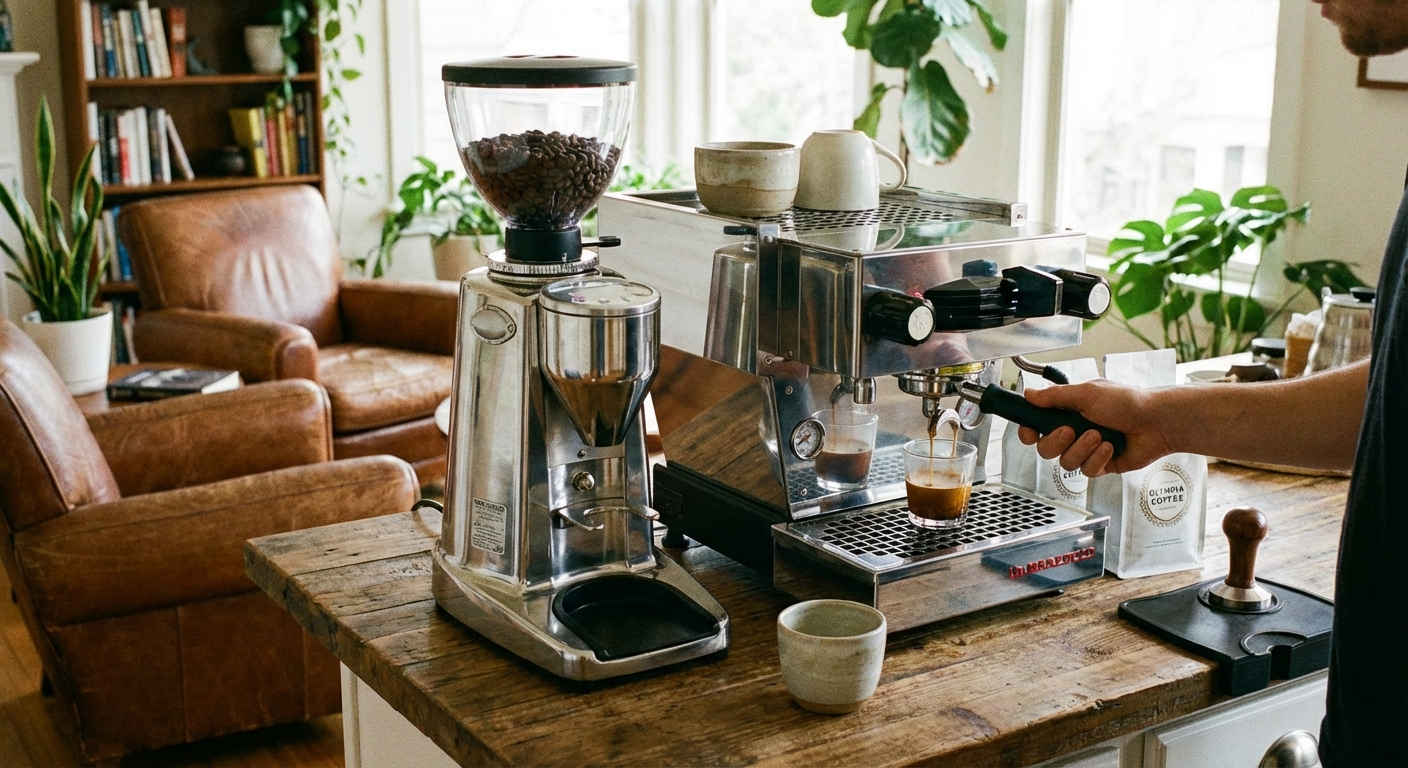
A burr grinder + espresso machine setup needs at minimum:
- Grinder footprint: typically 15×20cm for a compact model, up to 25×30cm for a larger model
- Espresso machine: 30–50cm wide, 30–40cm deep
- Cup warming space: on top of the machine (most espresso machines have a flat top)
- Tool tray: for portafilter, tamper, distribution tool — a small 20×25cm tray keeps these off the counter
Pro tip: Position your grinder directly above or beside the portafilter station to minimise movement during the grind-dose-tamp sequence.
Storage Essentials
- Bean storage: Airtight one-way valve container for beans in use. Never store in the freezer if using daily — condensation degrades beans. Freeze only for long-term storage (6+ months).
- Scale: A 0.1g-accurate scale for consistent dosing. The Acaia Pearl and Timemore Black Mirror are coffee community favourites.
- Tamper: A calibrated 58mm tamper for espresso (match to your portafilter basket size).
For more on setting up a functional home coffee station — storage, counter arrangement, and cable management — our article on best espresso machine for home use covers the full setup in detail. If you prefer filter coffee, our complete pour-over coffee guide pairs perfectly with any of the grinders on this list. If you prefer filter coffee, our complete pour-over coffee guide pairs perfectly with any of the grinders on this list.
Buying a Refurbished Grinder
Baratza's refurbished programme is one of the best-kept secrets in home coffee. Baratza sells factory-refurbished grinders at 20–30% off retail, with a 1-year warranty, direct from their website.
If you're buying a first burr grinder and are budget-conscious, a refurbished Baratza Encore ($120–$130 refurbished vs $170 new) is exceptional value.
Other sources for quality used grinders:
- Home-Barista.com classified section — enthusiast community, grinders well-maintained
- Reddit r/espresso buy/sell threads — similarly knowledgeable sellers
- Facebook Marketplace — higher risk, but often significant savings on name-brand grinders
When buying used, ask for:
- Last cleaning date
- Bean throughput (if known)
- Whether burrs have been replaced