Guide
Cold Brew vs Iced Coffee: What's the Difference? (2026)
By Home Coffee Spot Editorial Team · Updated 2026-04-18
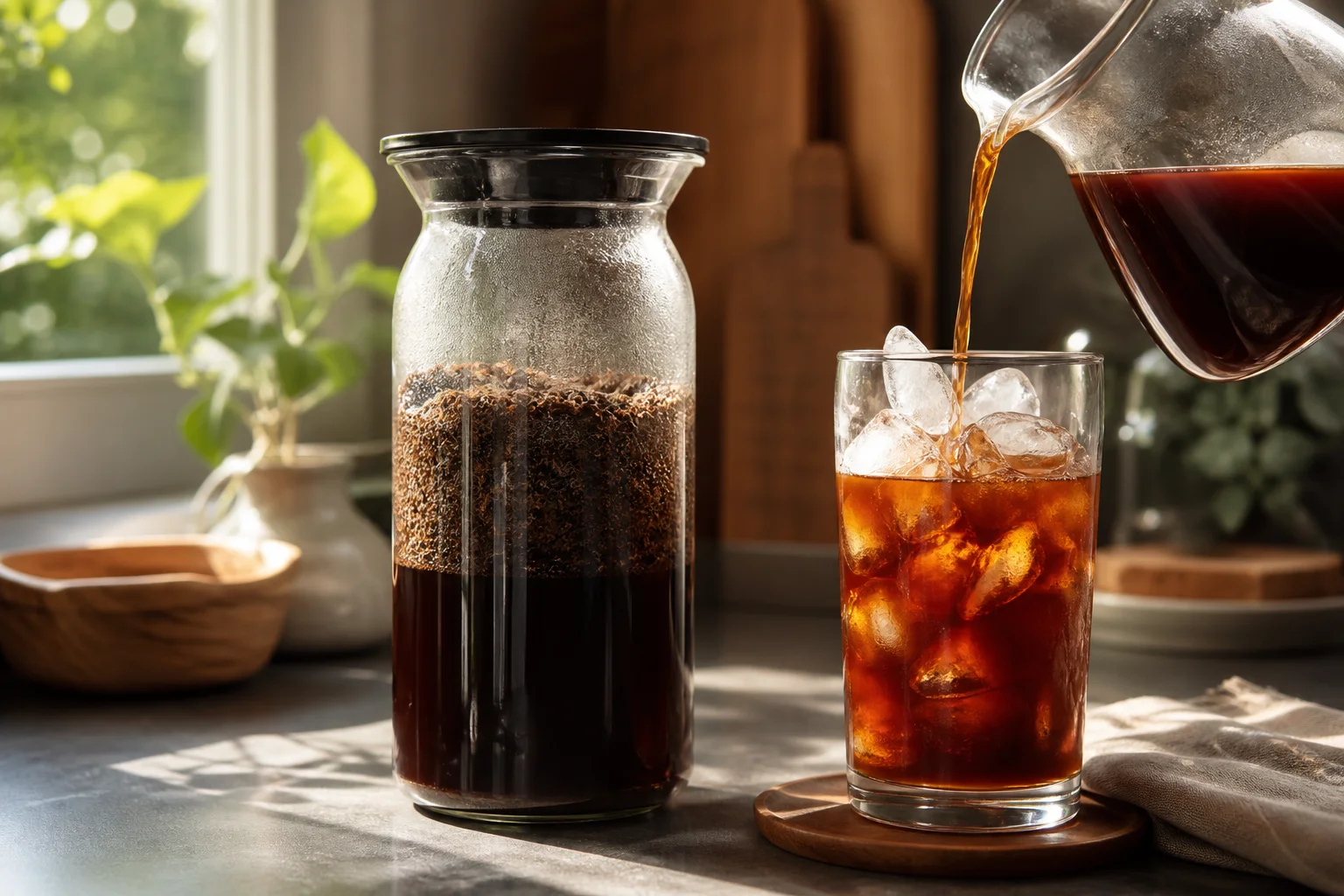
If you have ever ordered an iced coffee at a café and received something completely different from the dark, rich cold brew you had last summer, you are not alone. These two chilled coffee drinks are often lumped together, but they are made in entirely different ways — and that difference shows in the flavor, caffeine content, cost, and even the health properties of each drink.
Cold brew and iced coffee are not interchangeable names for the same beverage. One is brewed with cold water over an extended period. The other is simply hot-brewed coffee served over ice. Understanding those differences will help you choose the right drink for your morning routine, your palate, and your budget.
This guide breaks down every meaningful difference between cold brew vs iced coffee so you can order (or make) with confidence at home.
Table of Contents
- What Is Iced Coffee?
- What Is Cold Brew?
- Brewing Method Comparison
- Flavor and Taste Differences
- Caffeine Content: Which Is Stronger?
- Acidity and Stomach Sensitivity
- Cost Comparison: Café vs Home
- Equipment Needed to Make Each at Home
- How to Make Both at Home
- Which One Should You Choose?
- Frequently Asked Questions
- Sources & Further Reading
What Is Iced Coffee?
Iced coffee is exactly what the name implies: hot-brewed coffee that has been cooled down and served over ice. Most specialty coffee shops pull a shot of espresso or brew a batch of hot drip coffee, let it cool for a few minutes, and then pour it over a glass full of ice cubes.
The ice does more than chill the drink. As the ice melts, it dilutes the coffee, which is why many people find that iced coffee tastes slightly more muted or watery than its hot equivalent. To compensate, baristas at cafés often brew the coffee at double strength before pouring it over ice.
There are several popular variations of iced coffee:
- Iced Americano — espresso shots mixed with cold water, then poured over ice
- Iced Latte — espresso shots with cold milk over ice
- Vietnamese Iced Coffee — hot brewed using a phin filter, sweetened with condensed milk, and served over ice
- Flash Brewed Iced Coffee — hot water is poured over grounds in a special brewer that cools rapidly, creating a more concentrated result designed for ice
Iced coffee is quick to make, flexible in flavor, and works well with any brewing method. It is the default iced option at most coffee shops because it takes minutes, not hours.
 Fresh hot-brewed coffee poured over ice creates an immediate chill — the defining characteristic of iced coffee.
What Is Cold Brew?
Cold brew is a brewing method, not a serving style. It uses cold or room-temperature water to extract flavors from coffee grounds over an extended period — typically between 12 and 24 hours. No heat is involved at any stage of the process.
Because heat accelerates the extraction of certain compounds in coffee — including some of the more bitter tasting agents — the cold-water process produces a fundamentally different flavor profile. Cold brew tends to be smoother, less acidic, sweeter, and more chocolatey than hot-brewed coffee poured over ice.
The result of cold brew is almost always a concentrate. The grounds steep in water for many hours, extracting a highly flavored liquid that is then diluted with water, milk, or a milk alternative before drinking. A typical ratio is one part concentrate to one or two parts diluent, depending on your taste preferences.
Commercial cold brew has exploded in popularity over the past decade. Major chains including Starbucks, Dunkin', and Blue Bottle Coffee now offer cold brew as a permanent menu item. At specialty cafés, cold brew often sits in a tap system — much like a nitro beer — and is served with a creamy head of tiny bubbles.
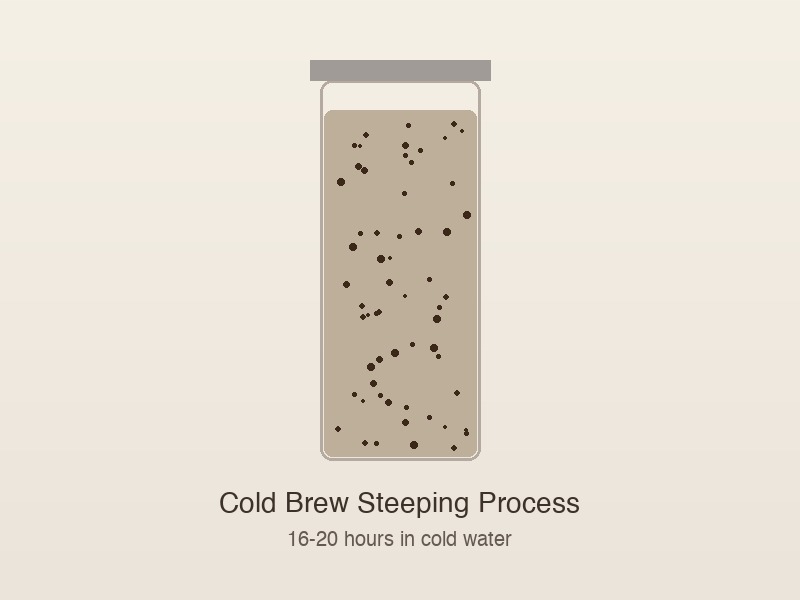 Cold brew grounds steep in cold water for 12–24 hours, producing a smooth, concentrated extract.
Brewing Method Comparison
The table below summarizes the key brewing differences between cold brew and iced coffee.
| Factor | Cold Brew | Iced Coffee |
|---|---|---|
| Water Temperature | Cold or room temp (35–70°F / 2–21°C) | Hot (195–205°F / 90–96°C) |
| Brew Time | 12–24 hours | 2–5 minutes (espresso) or 3–5 minutes (drip) |
| Brewing Vessel | Jar, cold brew tower, French press | Any drip brewer, espresso machine, or pour-over |
| Grind Size | Coarse | Medium to fine |
| Result | Concentrate (needs dilution) | Ready to drink (can add ice) |
| Shelf Life (refrigerated) | Up to 2 weeks | 4–6 hours |
| Acid Level | Significantly lower | Higher (similar to hot coffee) |
| Typical Strength | Very strong concentrate | Moderate, varies with dilution |
The brewing temperature is the single most important distinction. Heat extracts coffee's flavor compounds quickly — within minutes — but it also pulls out certain oils and acids that contribute to both bitterness and the sharp, bright acidity associated with hot coffee. Cold water extracts those same compounds much more slowly, which changes the chemical makeup of the final cup.
A study published in the Scientific Reports journal in 2017 found that cold brew coffee had significantly lower titratable acidity compared to hot brew, even when both were brewed from the same beans and roast level. This has real implications for people with sensitivity to acidic foods.
The brewing process for cold brew (top) vs iced coffee (bottom) differs in temperature, time, and equipment requirements.
Flavor and Taste Differences
If you drink both drinks side by side — made from the same beans — the flavor contrast is immediately obvious.
Cold brew flavor profile:
- Smooth and round on the palate
- Naturally sweet without added sugar
- Notes of chocolate, caramel, and sometimes nuttiness
- Very low bitterness
- Low acidity — no sharp or bright notes
- Velvety texture, especially when served with a nitro tap
Iced coffee flavor profile:
- Bright and lively acidity, similar to hot coffee
- More aromatic and complex on the nose
- Flavor varies widely depending on the beans and brewing method
- Can taste slightly diluted as ice melts
- Better at showcasing origin characteristics (terroir, processing method, roast level)
The reason cold brew tastes sweeter is chemical, not perceptual. Cold water extracts fewer of the chlorogenic acids that break down into quinic acid during hot brewing — a compound that contributes significantly to bitterness and astringency. As a result, cold brew requires less sugar to taste sweet.
If you enjoy the bright, wine-like acidity of a light roast Ethiopian coffee, iced coffee will showcase those qualities far better than cold brew. If you prefer something smooth, chocolatey, and easy to drink, cold brew is the better vehicle.
Cold brew (left) typically has a darker, more opaque appearance than iced coffee (right), which is more translucent.
Caffeine Content: Which Is Stronger?
Caffeine content is where cold brew often surprises people. A standard 12-fluid-ounce serving of cold brew concentrate — before dilution — contains roughly 200 to 300 mg of caffeine. By contrast, the same volume of standard drip iced coffee contains approximately 120 to 160 mg.
This does not mean cold brew is universally "stronger" in every serving situation. Because cold brew is almost always diluted 1:1 with water or milk before drinking, the caffeine per serving ends up closer than the raw numbers suggest. But if you drink cold brew concentrate undiluted (not recommended), the caffeine punch is substantial.
The FDA recommends a daily caffeine intake of no more than 400 mg for healthy adults — roughly four to five cups of brewed coffee. Cold brew concentrate can deliver half that in a single 12-ounce glass if consumed undiluted.
A few variables affect caffeine levels in both drinks:
- Bean type: Robusta beans contain roughly twice the caffeine of Arabica beans
- Roast level: Darker roasts actually contain slightly less caffeine than lighter roasts by weight, though the difference is small
- Grind size and brew ratio: Finer grinds and more coffee-to-water ratio extract more caffeine
- Steep or brew time: Longer extraction in cold brew leads to higher caffeine concentration
If you are caffeine-sensitive, iced coffee may be the safer daily choice because it is easier to gauge and control the caffeine content per serving.
Caffeine levels vary based on brew method, bean type, and dilution. Cold brew concentrate is significantly stronger before dilution.
Acidity and Stomach Sensitivity
This is one of the most significant practical differences between cold brew and iced coffee, particularly for people who experience acid reflux, heartburn, or general stomach sensitivity after drinking coffee.
Cold brew's low acidity is not a marketing claim — it is a measurable, scientifically documented characteristic. The Scientific Reports study referenced earlier confirmed that cold brew coffee demonstrated significantly lower concentrations of total titratable acids compared to hot brew. This was true across multiple roast levels and bean origins tested.
The practical implications:
- People with GERD (gastroesophageal reflux disease) often tolerate cold brew better than hot coffee or iced coffee
- Cold brew produces fewer instances of the "burning stomach" sensation
- The smoother mouthfeel makes cold brew easier to drink in larger quantities
- Cold brew still contains caffeine, which can stimulate some stomach acid production, so it is not completely acid-free
If you have been avoiding iced coffee because it upset your stomach, switching to cold brew might be the solution. Just be mindful of the higher caffeine concentration if you are sensitive to that stimulant.
Heat extracts more acidic compounds from coffee grounds, while cold water brewing preserves a lower-acid profile.
Cost Comparison: Café vs Home
At the Café
Ordering cold brew at a specialty café typically costs $1 to $3 more than a comparable iced coffee. This premium reflects the cost of the longer brew time and the larger volume of coffee grounds required — cold brew recipes often call for a 1:4 to 1:8 coffee-to-water ratio, compared to the 1:15 to 1:17 ratio used in standard hot drip brewing.
Some cafés charge a flat rate for unlimited cold brew refills during a visit, which can make the cost-per-cup more favorable if you are a heavy drinker.
At Home
The cost advantage shifts dramatically when you brew at home. Both drinks require the same basic equipment — a coffee maker or brewing vessel — but cold brew has a few nuances:
- Coffee grounds: Cold brew uses approximately 1.5 to 2× more coffee grounds per batch than a standard brew, so your per-batch coffee cost is higher
- Time vs money: You invest time (12–24 hours of passive steeping) rather than money
- Bulk efficiency: A single cold brew batch producing 4–6 cups of concentrate can last an entire week, reducing the per-cup cost significantly
- Equipment upgrades: A dedicated cold brew maker (OXXO Coffeenow or Takahiro Cold Brew Maker) costs $30–$80 but pays for itself within a month or two compared to café prices
Homemade cold brew costs approximately $0.50–$1.00 per 8-ounce serving when you factor in the price of beans and electricity. Café cold brew averages $4–$6 per serving.
Equipment Needed to Make Each at Home
Equipment for Iced Coffee
Iced coffee is forgiving with equipment. You can make it using almost any brewing method you already own:
- Drip coffee maker — brew as normal, let cool 5 minutes, pour over ice
- Espresso machine — pull shots directly over ice for an iced Americano or latte
- Pour-over (Chemex or Hario V60) — brew hot, cool briefly, serve over ice
- AeroPress — versatile and quick; brew hot and press directly into an ice-filled glass
- French press — brew hot, press, let cool slightly, serve over ice
The only additional purchase you may want is a good ice cube tray. Some coffee enthusiasts use leftover coffee ice cubes to prevent dilution as the ice melts — simply freeze brewed coffee in ice cube trays and use those cubes instead of regular ice.
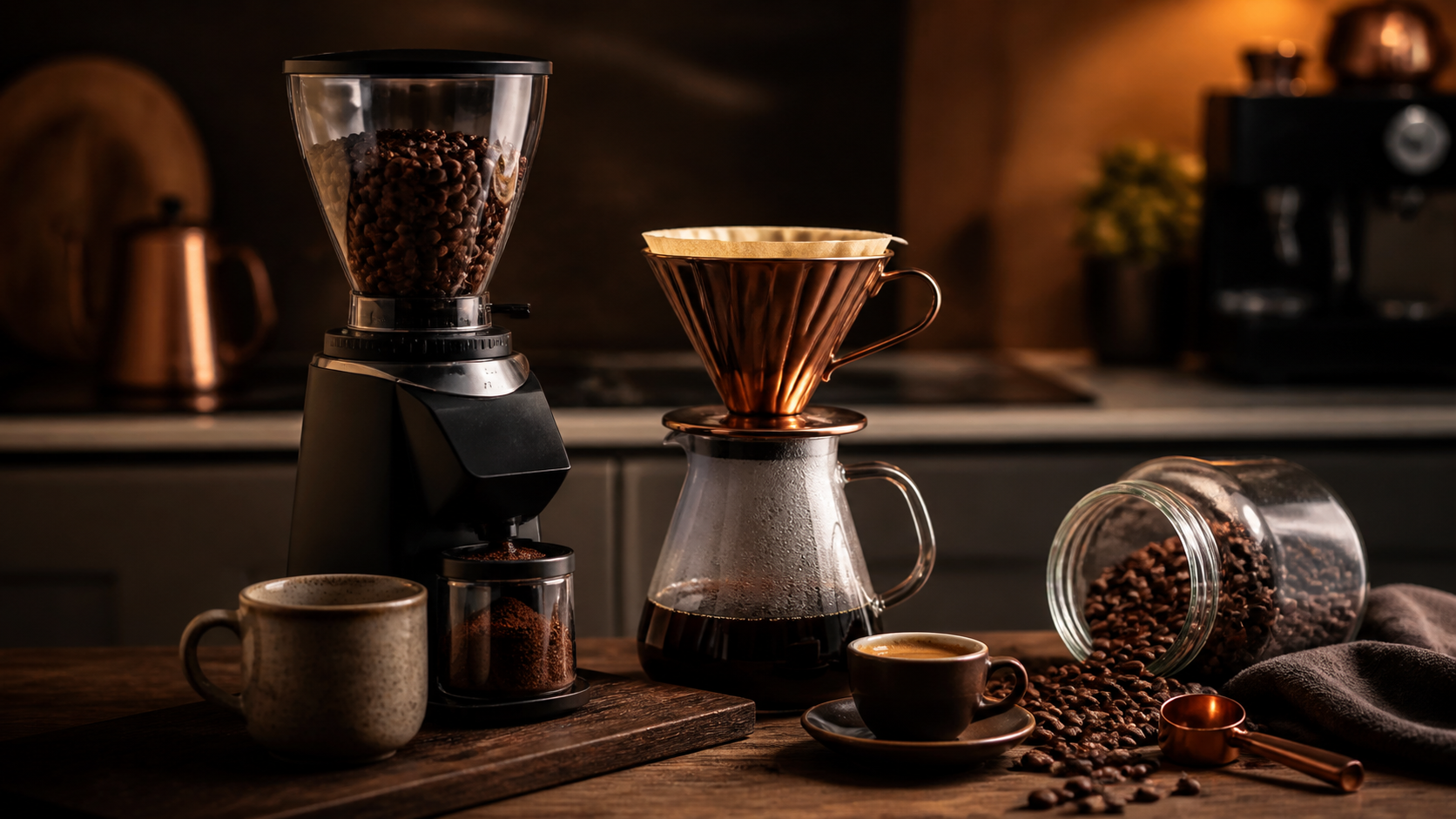
A pour-over or espresso machine can be used to brew hot coffee for iced coffee in under five minutes.
Equipment for Cold Brew
Cold brew requires a few specific pieces of equipment, none of which are expensive or complicated:
- Large jar or pitcher — 1-liter minimum capacity for home batches
- Fine mesh strainer or cheesecloth — to filter out grounds after steeping
- Coffee grinder — to grind beans to a coarse consistency
- Paper coffee filters (optional) — for a cleaner, grit-free result
- Cold brew pitcher or maker — options like the OXXO Coffeenow, County Kitchen Cold Brew Maker, or Serena Cold Brew System make the process neater and easier
- Kitchen scale — for accurate coffee-to-water ratio measurement
The single most important equipment tip: use a coarse grind. Finely ground coffee will over-extract in a cold brew steep and produce a bitter, murky result. If you buy pre-ground coffee, look for a "cold brew grind" or "coarse grind" label.
A simple home cold brew setup: coarse grounds, cold water, a jar, and a mesh strainer is all you need to get started.
How to Make Both at Home
Basic Cold Brew Recipe
This recipe makes approximately 4 cups of concentrate, which dilutes to 8–10 servings.
Ingredients:
- 1 cup (120 g) coarsely ground coffee beans
- 4 cups (960 ml) cold or room-temperature filtered water
Method:
- Combine the coarse-ground coffee and water in a large jar or pitcher. Stir to ensure all grounds are saturated.
- Cover and refrigerate for 12 to 18 hours. Longer steeping (up to 24 hours) produces a more concentrated result.
- Strain the mixture through a fine mesh strainer lined with cheesecloth or a paper filter.
- Transfer the concentrate to a clean sealed container and refrigerate.
- To serve, dilute 1 part concentrate with 1–2 parts cold water, milk, or your preferred liquid over ice.
Pro tip: If you prefer a smoother cold brew with no sediment, strain twice — first through a mesh strainer, then through a paper coffee filter.
Basic Iced Coffee Recipe
Ingredients:
- 2 shots espresso or ½ cup (120 ml) freshly brewed hot coffee
- ½ cup (120 ml) cold milk or oat milk
- Ice cubes
- Optional: 1–2 teaspoons sugar, simple syrup, or flavored syrup
Method:
- Brew your espresso or hot coffee using your preferred method.
- Fill a tall glass with ice cubes — use coffee ice cubes to minimize dilution.
- Pour the hot brew over the ice.
- Add milk and sweetener if desired. Stir briefly.
- Serve immediately.
For a stronger iced coffee, brew at double strength (half the water) and pour over the same amount of ice. The melted ice will dilute to a normal strength.
Four simple steps to cold brew perfection: combine, steep, strain, and serve.
Which One Should You Choose?
There is no single "winner" between cold brew vs iced coffee. The right choice depends on your priorities:
Choose iced coffee if you:
- Want a quick brew in under five minutes
- Enjoy bright, acidic, aromatic coffee flavors
- Like to showcase single-origin bean characteristics
- Are brewing for one or two people at a time
- Want flexibility in flavor additions and milk ratios
Choose cold brew if you:
- Have acid sensitivity or reflux issues
- Prefer a smooth, sweet, low-bitterness flavor profile
- Want to batch-brew once and drink all week
- Enjoy the convenience of making a week's worth of coffee in one session
- Want a versatile concentrate that works in hot drinks, desserts, and smoothies too
Both drinks can be customized with flavored syrups, milk alternatives, sweeteners, and spices. Cold brew concentrate is particularly versatile — it can be heated for a hot drink on cold days, blended into smoothies, or used in baking and dessert recipes.
For a deeper dive into the specific equipment that works best for each brewing style, see our guide to the best pour-over coffee makers or how to choose the right cold brew maker for your kitchen.
Frequently Asked Questions
Is cold brew just iced coffee that is cold?
No. Cold brew and iced coffee are fundamentally different in how they are made. Cold brew uses room-temperature or cold water to steep grounds for 12–24 hours, while iced coffee is simply hot-brewed coffee poured over ice. The brewing temperature and time create distinct flavor profiles.
Which has more caffeine: cold brew or iced coffee?
A typical cold brew concentrate contains roughly 200–300 mg of caffeine per 12 oz serving, while the same serving size of iced coffee comes in at about 120–160 mg. Cold brew is generally stronger because the long steep time extracts more caffeine from the grounds.
Can I make cold brew at home without special equipment?
Yes. You do not need a commercial cold brew tower or an expensive brewer. A large jar, a mesh strainer or cheesecloth, and coarse-ground coffee are enough to make cold brew at home. Simply combine coffee and cold water, let it steep, then strain and refrigerate.
How long does cold brew last in the refrigerator?
Properly stored in a sealed container, cold brew concentrate will stay fresh for up to 2 weeks in the refrigerator. Iced coffee, because it is brewed hot and may contain milk or sugar, typically lasts only 4–6 hours before the flavor degrades noticeably.
Which drink is better for people with acid reflux or sensitive stomachs?
Cold brew is generally the better choice for people with acid sensitivity. The cold-water brewing process produces a coffee with significantly lower acidity than hot-brewed iced coffee. Studies have shown cold brew can be up to 65% less acidic than its hot-brewed counterpart.
Sources & Further Reading
- Cornelius, M. et al. (2017). "Analysis of the pH and acidity of cold brew and hot brew coffee." Scientific Reports, 7, Article 45911. https://www.nature.com/articles/srep45911
- International Coffee Organization (ICO). (2025). "Global Coffee Report: Consumption Trends and Market Insights." ICO Publications. https://www.ico.org
- United States Food and Drug Administration (FDA). (2024). "Spilling the Beans: How Much Caffeine Is Too Much?" https://www.fda.gov
- Specialty Coffee Association (SCA). (2023). "Water Quality Guidelines and Brewing Standards." https://sca.coffee
- American Chemical Society (ACS). (2021). "The Chemistry of Cold Brew Coffee." Journal of Agricultural and Food Chemistry, 69(14), 4188–4197. https://pubs.acs.org/journal/jafcau
- World Coffee Research (WCR). (2024). "Caffeine Content by Coffee Variety: Arabica vs Robusta." https://worldcoffeeresearch.org
Last updated: April 2026
Evidence note: This comparison uses manufacturer specifications, published research, and independently reported owner feedback. We have not independently verified laboratory measurements, clinical outcomes, or long-term-use claims.