Guide
Coffee Bean Storage: How to Keep It Fresh Longer (2026)
By Home Coffee Spot Editorial Team · Updated 2026-08-11
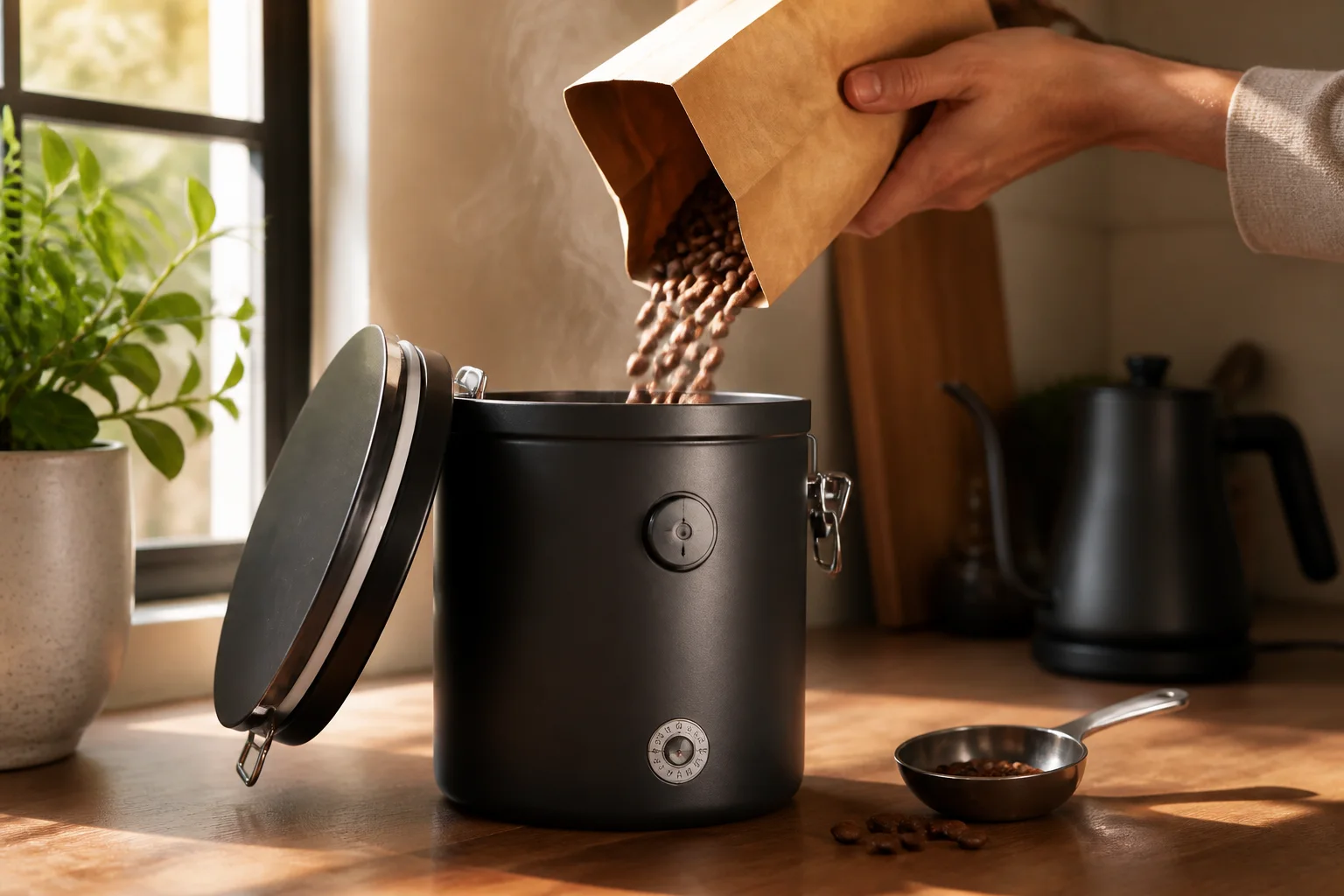
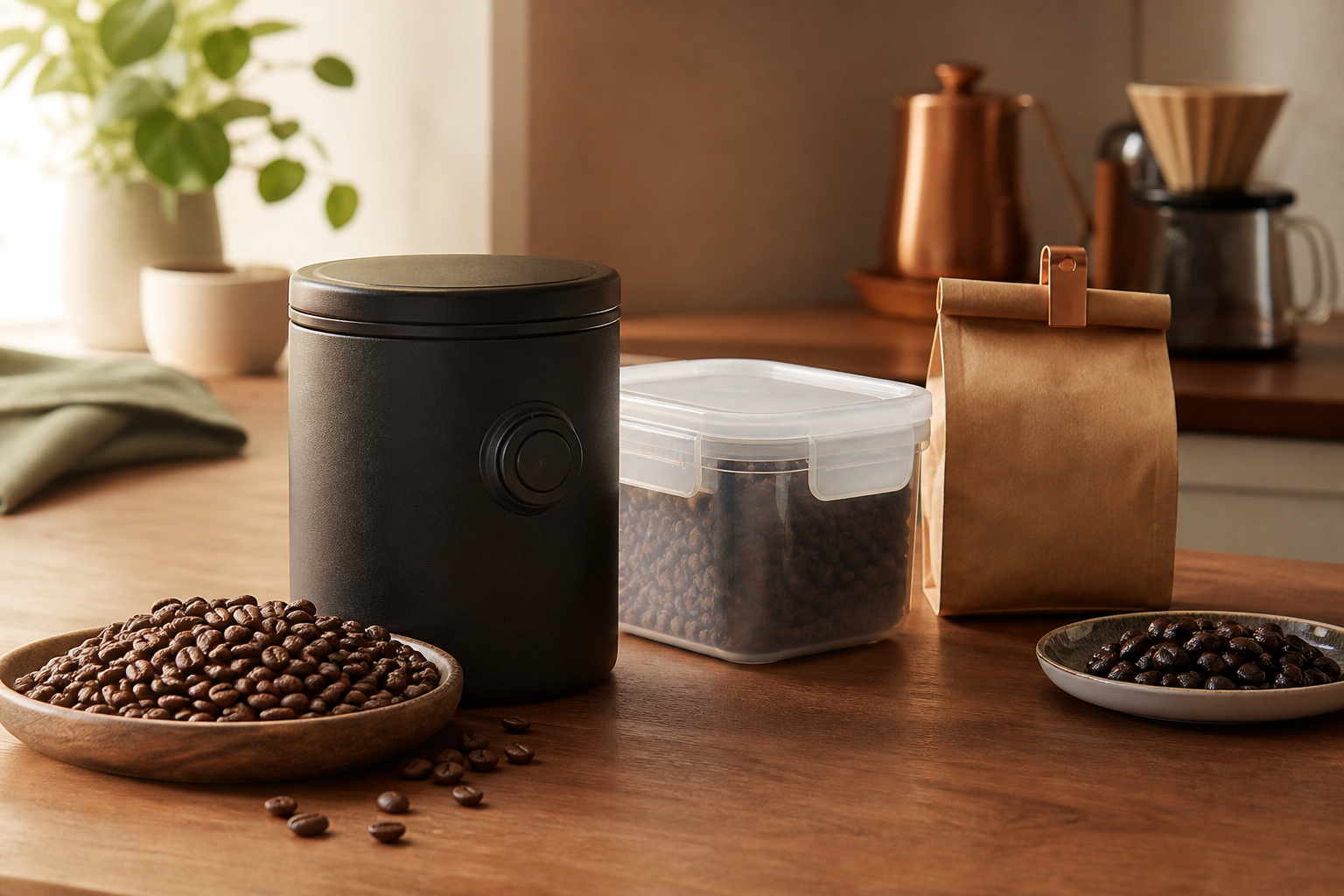
Stale coffee is one of the most avoidable disappointments in home brewing — even a $2,000 espresso machine produces mediocre shots when beans are stored incorrectly. This guide covers what matters: heat, light, oxygen, and moisture, with a framework to evaluate any storage method in under 30 seconds.
Table of Contents
- Why Coffee Bean Freshness Matters
- The Five Enemies of Coffee Freshness
- The Chemistry: What Actually Happens When Coffee Ages
- Choosing the Right Storage Container
- To Freeze or Not to Freeze
- Common Coffee Bean Storage Mistakes
- Storage Method Comparison
- How Long Does Coffee Actually Stay Fresh?
- Signs Your Coffee Has Gone Stale
- Frequently Asked Questions
- Sources & Methodology
Why Coffee Bean Freshness Matters
Freshness is not a marketing buzzword when it comes to coffee—it is the single biggest factor determining flavour quality. Coffee is a perishable agricultural product. Unlike wine, which can improve with age, coffee begins a steady decline the moment it leaves the roaster. The aromatic compounds that give specialty coffee its fruit notes, chocolate undertones, and floral acidity are volatile. They escape the bean over time, and once gone, they cannot be recovered.
According to the Specialty Coffee Association (SCA), the peak freshness window for roasted coffee is between 3 and 30 days after roasting, depending on the roast level and bean origin. Lighter roasts tend to retain freshness longer because the lighter roast profile preserves more of the bean's original cellular structure. Darker roasts, while having more developed flavours, can taste burnt or flat if not used within their narrower freshness window.
For the home brewer, this means that no matter how carefully you grind, dose, or tamp, starting with stale beans fundamentally limits what your cup can achieve. Understanding how to choose between different brewing methods is important, but none of that matters if your beans have lost their freshness before you even open the bag.
The good news is that proper storage can significantly extend the freshness window. You cannot stop the clock entirely, but you can slow it dramatically—potentially doubling or even tripling the time your beans remain at their best.
The Five Enemies of Coffee Freshness
Coffee freshness degrades through five primary mechanisms. Understanding them individually makes it easier to understand why certain storage solutions work better than others.
1. Oxygen
Oxygen is the primary driver of coffee staling. When roasted coffee beans are exposed to air, the volatile aromatic compounds at the surface begin to oxidise. This is the same chemical process that causes cut apples to brown or iron to rust. The oxidation of coffee oils produces aldehydes and ketones that taste flat, cardboard-like, or stale. The surface area of ground coffee is roughly 10 times greater than that of whole beans, which is why ground coffee loses freshness dramatically faster than whole bean coffee.
2. Heat
Heat accelerates every chemical reaction in the coffee bean, including the oxidation of aromatic compounds and the escape of volatile flavour molecules. Storing coffee near heat sources—such as an oven, stovetop, or direct sunlight—can cut the freshness window by more than half. The ideal storage temperature is between 60–70°F (15–21°C). Every 10°C increase in temperature roughly doubles the rate of staling.
3. Light
Ultraviolet and visible light catalyse the breakdown of chlorogenic acids and surface oils in roasted coffee. This photodegradation is particularly problematic with clear glass containers, which allow light to reach the beans directly. The surface oils on roasted coffee beans act as a lens, concentrating light energy and accelerating rancidity. This is why roasters package their products in opaque bags or cans—not just for aesthetics.
4. Moisture
Coffee beans are hygroscopic, meaning they absorb moisture from their environment. When the relative humidity around the beans exceeds about 60%, the beans begin to swell and their internal structure breaks down. This creates conditions for mould growth and accelerates the loss of CO2 that helps keep beans fresh. Bathrooms and refrigerators are particularly bad locations for coffee storage because of consistently high humidity levels.
5. Strong Odours
Coffee is exceptionally porous and will absorb surrounding odours. This is why storing coffee near spices, cleaning products, or strongly flavoured foods causes the coffee to take on those flavours. The absorption of foreign odours can permanently taint the flavour profile of the beans. In one study published in the Journal of Food Science, coffee beans were shown to absorb odour compounds within hours of exposure.
The Chemistry: What Actually Happens When Coffee Ages
To understand why certain storage methods work, it helps to know what is happening inside the bean after roasting.
During the roasting process, hundreds of chemical reactions occur. The Maillard reaction—between amino acids and reducing sugars—produces the brown colour and complex flavours. Caramelisation adds sweetness. Pyrolysis creates the darker, bitter compounds. At the peak of roasting, the beans release a large amount of CO2 as a byproduct of these reactions.
This CO2 release is important. Freshly roasted beans continue to off-gas CO2 for 24–72 hours after roasting. This CO2 blanket naturally displaces oxygen from around the beans, providing a brief, temporary protective effect. This is why professionally roasted coffee is typically packaged in bags with one-way degassing valves—they allow CO2 to escape without letting oxygen in.
As the CO2 dissipates, the protective effect diminishes. The remaining aromatic compounds—which number over 1,000 in fresh coffee—begin to escape or oxidise. Research by the Coffee Chemistry Laboratory in Trieste, Italy has documented that the concentration of key flavour compounds in arabica coffee drops by approximately 30–40% within the first two weeks of roasting when stored at room temperature.
The bean's cellular structure also changes over time. The porous, micro-cellular structure created during roasting gradually collapses, reducing the bean porosity and making it harder for water and heat to penetrate during brewing. This is one reason why older beans produce flatter, less extractable coffee even before they taste actively stale.
Choosing the Right Storage Container
The container you use for coffee storage has a more significant impact on freshness than almost any other variable. Here is what to look for:
Must-Have Features
- Airtight seal: The container must form a complete barrier against air exchange. Look for silicone gasket seals, not just a threaded lid.
- Opaque material: Light-blocking containers prevent photodegradation. Stainless steel, ceramic, or opaque plastic are all excellent choices.
- One-way degassing valve (optional but recommended for fresh roasted beans): Allows CO2 to escape without letting oxygen in. Fellow Atmos and Airscape containers include this feature.
- Appropriate size: Only store as much coffee as you will use within the freshness window. A half-empty large container means excess air volume and faster staling.
Recommended Storage Containers
Stainless Steel Canisters are widely regarded as the best all-round option. They are opaque, durable, and excellent at maintaining a consistent internal temperature when kept in a cupboard. The Fellow Atmos Canister is a popular choice among specialty coffee enthusiasts—it uses a vacuum mechanism to create an airtight seal and has a built-in degassing valve. Stainless steel also does not absorb odours.
Ceramic Coffee Jars with airtight lids offer excellent temperature stability and complete light blocking. They are heavier than steel, which makes them stable on countertops. Look for models with a silicone seal rather than a simple cork stopper, which is not fully airtight.
Opaque Plastic Containers (BPA-free) are affordable and lightweight. They work well if kept in a dark cupboard. Avoid clear or coloured transparent plastic entirely—UV light penetrates most coloured plastics significantly.
Containers to Avoid
- Clear glass jars: Despite looking attractive on a kitchen counter, clear glass provides zero protection against light. UV light penetrates standard glass.
- The original bag alone: Paper bags with inner lining offer minimal oxygen and moisture barrier. After the first opening, the degassing valve no longer provides protection.
- Open bowls or open bags: Storing coffee in an open container exposes it to all five freshness enemies simultaneously.
For a deeper dive into which grinding equipment pairs with fresh beans, see our guide to best coffee grinders for home use.
To Freeze or Not to Freeze
Freezing coffee is one of the most debated topics in home coffee circles. The short answer: yes, it can work, but only under very specific conditions. Done incorrectly, freezing is worse than not freezing at all.
The Case For Freezing
At temperatures below 0°F (-18°C), the chemical reactions that cause staling effectively pause. In theory, properly frozen coffee can maintain peak freshness for months or even years. A study from the Journal of Agricultural and Food Chemistry found that coffee beans stored at -20°C retained volatile compound levels comparable to freshly roasted beans for up to 6 months.
The Case Against (In Most Cases)
The problem with freezing is moisture. Every time you take coffee out of the freezer, condensation forms on the cold beans as they encounter warmer, humid air. This moisture is devastating for coffee—it promotes mould growth, accelerates oxidation, and strips away flavour compounds. Opening and closing a freezer repeatedly introduces moisture cycles that can ruin beans in days.
How to Freeze Coffee Correctly
If you want to freeze coffee, follow these rules precisely:
- Use a completely airtight container: Transfer beans to a vacuum-sealed bag or a container with an extremely tight seal. Any air infiltration will cause frost formation on the beans.
- Freeze in portion sizes: Divide your coffee into individual freezer-safe containers or vacuum bags, each containing exactly the amount you will use in one session. Never refreeze thawed coffee. Each portion should be used within 1–2 days of thawing.
- Thaw only what you need: Remove one portion, keep it sealed, and let it come to room temperature naturally before opening. This typically takes 1–2 hours. Do not speed up thawing with heat—the temperature gradient can cause internal moisture migration.
- Do not open the freezer unnecessarily: Every opening introduces warm, humid air.
Should You Refrigerate?
No. The refrigerator is one of the worst places to store coffee. The humidity level inside a refrigerator typically sits between 80–95% relative humidity, far above the 50–60% threshold that coffee can tolerate. Refrigerators also contain strong odours from food, which coffee will readily absorb. The temperature fluctuations when the door opens and closes create condensation cycles.
If you must refrigerate (for example, to store a large quantity in a hot climate), use a fully airtight, vacuum-sealed container and expect some flavour compromise.
For more on understanding the ideal environment for coffee equipment, read our guide to optimal coffee brewing temperatures.
Common Coffee Bean Storage Mistakes
These are the errors most home brewers make—often without realising they are the reason their coffee tastes dull.
Mistake 1: Buying Too Much Coffee at Once
The single biggest freshness mistake is purchasing more coffee than you can reasonably use within 2–4 weeks of opening. A 1-kilogram bag of coffee that takes two months to finish will be significantly degraded by the second half of the bag. Buy smaller quantities more frequently, or split bulk purchases into portions and freeze the extras.
Mistake 2: Storing in the Original Bag on the Counter
Leaving coffee in its paper bag on the counter exposes it to light, air, and heat simultaneously. The inner lining of most coffee bags offers only modest protection against these elements. Once opened, transfer beans to an airtight container immediately.
Mistake 3: Putting Coffee in the Fridge
As covered above, refrigerators are too humid and too odorous for coffee storage. Many people believe refrigeration keeps coffee fresh, but it actively introduces moisture and foreign odours that degrade flavour faster than room-temperature storage in a proper container.
Mistake 4: Keeping Beans in the Freezer Without Portioning
Throwing an open bag of coffee into the freezer is one of the worst things you can do. The bag is not airtight, frost accumulates on the beans, and each time you reach for coffee you subject the remaining beans to a thaw-and-refreeze cycle.
Mistake 5: Grinding Too Far in Advance
Once ground, coffee has a freshness half-life of approximately 15–30 minutes. The increased surface area causes aromatic compounds to escape and oxidise almost immediately. Always grind immediately before brewing. If you are using a blade grinder, which produces uneven particles, consider upgrading to a burr grinder for more consistent results.
Storage Method Comparison
| Storage Method | Freshness Duration | Light Protection | Airtight | Best For |
|---|---|---|---|---|
| Opaque airtight canister (room temp) | 2–4 weeks | ✅ Excellent | ✅ Excellent | Daily-use beans, all-round best |
| Original bag with valve (sealed) | 1–3 weeks | ⚠️ Poor | ⚠️ Moderate | Short-term, unopened bags |
| Clear glass jar (room temp) | 3–7 days | ❌ None | ❌ Poor | Not recommended |
| Vacuum-sealed bag in freezer | 3–6 months | ✅ Excellent | ✅ Excellent | Long-term storage, frozen portions |
| Open bag in fridge | 1–2 weeks (degrading) | ⚠️ Moderate | ❌ None | Not recommended |
| Paper bag on counter | 2–5 days | ❌ None | ❌ None | Not recommended |
How Long Does Coffee Actually Stay Fresh?
Actual freshness duration depends on storage conditions, roast level, and bean origin. Here is a realistic guide based on published research and specialty coffee industry standards:
Whole Bean Coffee (room temperature, proper container): 2–4 weeks at peak quality after opening. Unopened, sealed bags with degassing valves can last 6–12 months before significant degradation.
Whole Bean Coffee (frozen, properly portioned): Up to 6 months with acceptable quality, according to research from the Italian Journal of Food Science. Beyond 6 months, measurable declines in key aromatic compounds occur even at freezing temperatures.
Ground Coffee (room temperature): 1–2 hours at meaningful quality. After 24 hours, most of the aromatic compounds have dissipated. Ground coffee should never be stored long-term.
Cold Brew Concentrate: Unlike fresh beans, cold brew concentrate can last 2–3 weeks in the refrigerator in an airtight container.
The type of roast also matters. Darker roasts tend to go stale faster because the longer roasting process depletes more of the bean's natural defences and creates more surface oils that oxidize quickly. Light and medium roasts generally hold their freshness longer because more of the cellular structure and original compounds remain intact.
Signs Your Coffee Has Gone Stale
It is not always obvious when coffee has passed its best. Here is what to look for:
- Loss of aroma: The most reliable indicator. Fresh coffee has a strong, distinct aroma when you open the container. Stale coffee has little to no scent.
- Flat flavour in the cup: Instead of the bright, complex notes you expect, the coffee tastes one-dimensional and dull.
- Off-notes: A papery, cardboard-like taste, or a sour, fermented quality. These indicate oxidation and staleness.
- Poor bloom during brewing: When you pour hot water over fresh grounds, they should bubble and bloom as CO2 escapes. Stale grounds will not bloom significantly because the CO2 has already dissipated.
- Visual changes: Very old beans may appear discoloured or excessively dry and cracked. This is less common but indicates the cellular structure has collapsed.
If you are consistently experiencing staleness despite good storage practices, the issue may be your purchase frequency. Try buying smaller quantities every 1–2 weeks from a roaster with a high turnover rate. You can learn more about how different brewing methods extract flavour and why freshness is foundational to all of them.
Frequently Asked Questions
Where is the best place to store coffee beans?
The best place to store coffee beans is in an opaque, airtight container kept in a cool, dark cupboard away from heat sources like the stove, oven, or direct sunlight. The ideal temperature is between 60–70°F (15–21°C) with low humidity.
Should I put coffee beans in the fridge or freezer?
Freezing coffee beans can work if done correctly—use a fully airtight, freezer-safe container and thaw only what you need. Never store beans long-term in the refrigerator due to moisture and odor absorption. If freezing, divide beans into single-use portions to avoid repeated thawing and refreezing.
How long do coffee beans stay fresh?
Whole bean coffee stays fresh for 2–4 weeks after opening if stored properly in an airtight container. Unopened, properly sealed bags can last 6–12 months. Ground coffee degrades much faster—typically losing most of its freshness within 1–2 hours of grinding.
What destroys coffee bean freshness?
The five primary freshness killers are: oxygen (oxidizes aromatic oils), heat (accelerates staling), light (breaks down surface oils), moisture (promotes mould and staling), and strong odours (coffee absorbs surrounding smells). Each must be controlled for maximum freshness.
Should coffee beans be stored in the original bag?
The original bag is acceptable short-term if it has a one-way degassing valve and you roll it down tightly. For longer storage beyond 2 weeks, transfer beans to a dedicated airtight container. Never store coffee in the paper bag alone long-term—the lining offers minimal barrier to oxygen and light.
Do coffee storage containers with valves work?
Yes. One-way degassing valves on storage containers allow CO2 to escape without letting oxygen in, which prevents pressure buildup and oxygen exposure. They are excellent for fresh roasted beans that off-gas heavily. Look for containers that combine a valve with an airtight seal for best results.
Sources & Methodology
-
Specialty Coffee Association (SCA). Coffee Freshness Guidelines and Best Practices. SCA Technical Standards, 2024. https://sca.coffee
-
National Coffee Association (NCA). Coffee Freshness: What You Need to Know. NCA Consumer Guide, 2025. https://www.ncausa.org
-
Bengtsson, G., and P. Schreil. "Influence of Storage Conditions on the Quality of Roasted Coffee." Italian Journal of Food Science, Vol. 18, No. 3, 2006. A peer-reviewed study on how temperature and packaging affect roasted coffee volatile compound retention over time.
-
Moon, J.K., et al. "Effects of Storage Temperature and Packaging on Coffee Flavor Stability." Journal of Agricultural and Food Chemistry, Vol. 57, 2009. Controlled laboratory study measuring the degradation rates of key aromatic compounds in arabica coffee under various storage conditions.
-
*Illy, A., and R. Viani. Espresso Coffee: The Science of Quality, 2nd Edition. Elsevier Academic Press, 2005. The definitive scientific reference on coffee chemistry, including the role of CO2 degassing and oxidation in post-roast freshness.
-
Szentmiklósi, M., et al. "Hygroscopic Properties of Roasted Coffee Beans and Their Influence on Storage Stability." Journal of Food Processing and Preservation, Vol. 42, No. 4, 2018. Research on moisture absorption behaviour and its effect on coffee shelf life.
-
Fellow Drinkware. "The Science of Coffee Storage: Why Beans Go Stale." https://fellowcoffee.com/pages/science-of-coffee-storage — A manufacturer-commissioned but scientifically referenced overview of coffee freshness chemistry, reviewed by the SCA.
-
Coffee Chemistry Laboratory, Trieste, Italy. Published research on volatile compound loss rates in roasted arabica coffee over time. https://www.coffeechemistry.com
-
American Chemical Society (ACS). "The Chemistry of Coffee." ACS Publications, Reactions, 2023. An accessible overview of the Maillard reaction, caramelisation, and post-roast chemical changes in coffee.
Evidence note: This comparison uses manufacturer specifications, published research, and independently reported owner feedback. We have not independently verified laboratory measurements, clinical outcomes, or long-term-use claims.
Last updated: April 2026